

What is “Nenmatsu Chosei” (Year-End Tax Adjustment)? A guide for our clients, including non-Japanese employees and owners
はじめに / Introduction
このページは、当事務所の顧問先の会社と、そこで働く皆さまのためのご案内です。
当事務所から年末調整の書類をお送りした方に向けて書いています。日本の方も、外国籍の方も、同じように読めるよう、やさしい日本語で書き、英語を併記しています。一般的な解説ではなく、当事務所の進め方にそった説明です。他の会社・他の税理士事務所の進め方とは違うことがあります。This page is for the client companies of our office and the people who work there. It is written for everyone who has received year-end adjustment documents from our office – Japanese and non-Japanese alike – in plain Japanese with English alongside. It is not a general guide; it follows the way our office handles the procedure, which may differ from other companies or other tax accountants.
毎年、秋になると、当事務所から「年末調整(ねんまつちょうせい)の書類」をお送りします。
日本で働くのが初めての方、母国にこの制度がない方には、わかりにくいものです。
このページでは、「あなたがすること」 と 「年末調整とは何か」 を、できるだけやさしく説明します。
Every autumn, our office sends you “Nenmatsu Chosei” forms. If you are new to working in Japan, or your home country has no similar system, this can be confusing. This page explains what you need to do and what Nenmatsu Chosei is, as simply as possible.
1. あなたがすること(3ステップ) / What you need to do (3 steps)
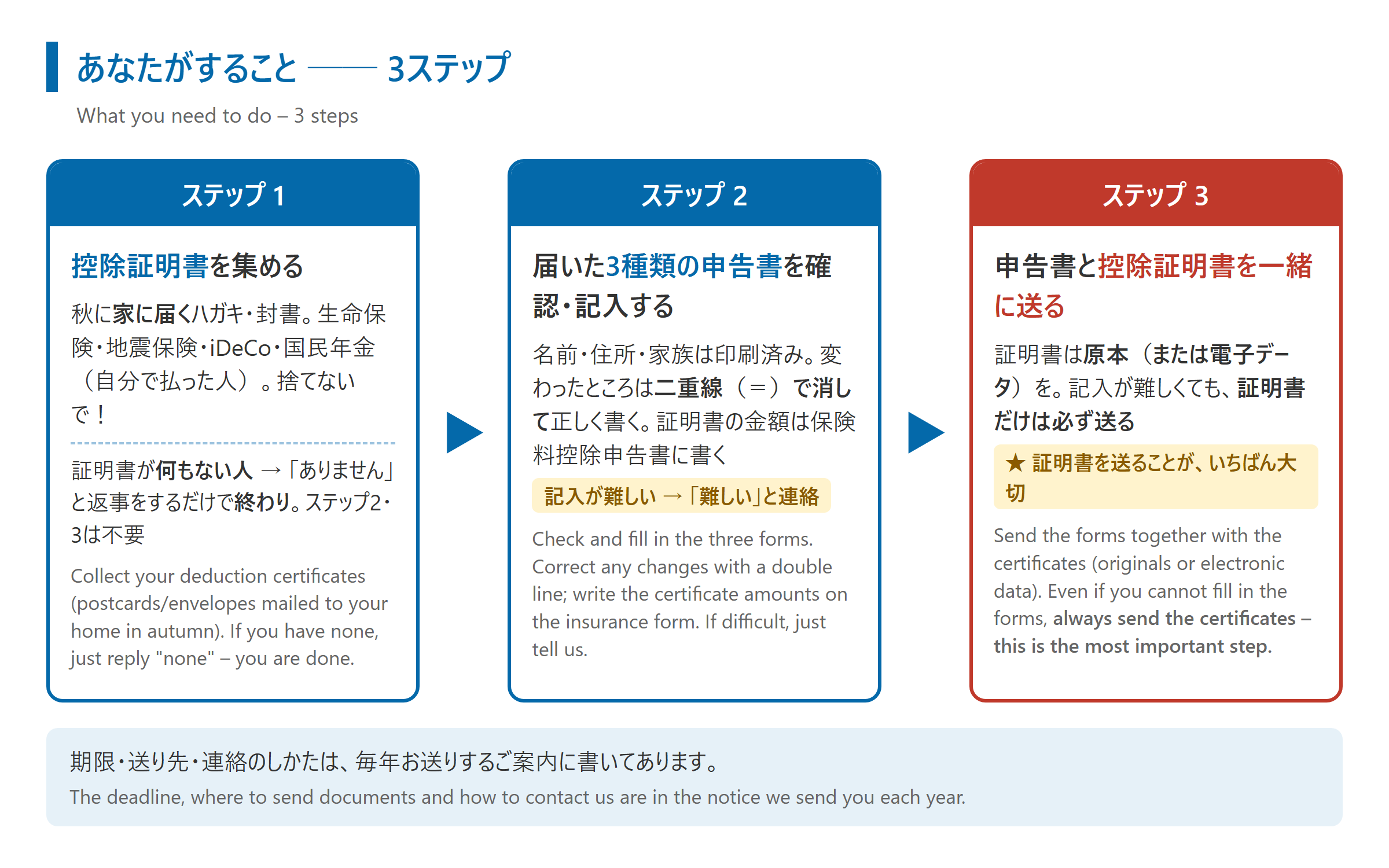
ステップ1 控除証明書(こうじょしょうめいしょ)を集める
秋になると、次のような書類があなたの家に郵送されてきます(会社には届きません)。ハガキや小さな封書で届くので、捨てないで取っておいてください。
- 生命保険(せいめいほけん)の控除証明書
- 地震保険(じしんほけん)の控除証明書
- iDeCo(イデコ・個人型確定拠出年金)の払込証明書
- 国民年金(こくみんねんきん)の控除証明書(自分で払った年金がある人)
【とても重要】証明書を送ることが、いちばん大切です。
証明書がないと、保険料を払っていても税金は安くなりません。
保険に入っていない、iDeCoもしていない、自分で払った年金もない方は、「控除証明書はありません」と返事をするだけで終わりです。 書類に書く必要はありません(ステップ2・3は不要です)。
会社の給与から引かれている健康保険・厚生年金・雇用保険は、こちらで自動的に計算します。
ステップ2 届いた3種類の申告書を確認して、記入する
会社または会計事務所から、3種類の申告書が届きます。
- 扶養控除等申告書(ふようこうじょとう しんこくしょ)
- 保険料控除申告書(ほけんりょうこうじょ しんこくしょ)
- 基礎控除申告書 等(きそこうじょ しんこくしょ とう)
多くの場合、あなたの名前・住所・家族の情報は、すでに印刷されています。
内容を見て、変わったところがあれば、二重線(=)で消して、正しい内容を書いてください。
(例:引っ越した、結婚した、子どもが生まれた、家族が日本に来た、家族が働き始めた)
ステップ1で集めた証明書の金額は、保険料控除申告書に書きます。
記入が難しい場合は、「記入が難しい」と連絡してください。
ステップ3 申告書と控除証明書を、一緒に送る
記入した3種類の申告書と、控除証明書の原本(または電子データ)を一緒に送ってください。
記入が難しい場合は、その旨を連絡したうえで、証明書だけは必ず送ってください。
期限と送り先、連絡のしかたは、毎年お送りするご案内に書いてあります。そちらを見てください。
In English
Step 1 – Collect your deduction certificates. In autumn, certificates for life insurance, earthquake insurance, iDeCo (private pension) and National Pension premiums you paid yourself are mailed to your home (not to your company), often as a postcard or small envelope. Do not throw them away.
[Very important] Sending the certificates is the most important thing. Without the certificate, your tax is not reduced even if you paid the premiums.
If you have no insurance, no iDeCo and no pension you paid yourself, simply reply “I have no certificates” – that is all. You do not need to fill in anything (Steps 2 and 3 are not needed). Health insurance, pension and employment insurance deducted from your salary are calculated automatically by us.
Step 2 – Check and fill in the three forms you received. You will receive three forms: (1) Dependent Deduction Form (Fuyo Kojo-to Shinkokusho), (2) Insurance Premium Deduction Form (Hokenryo Kojo Shinkokusho), and (3) Basic Deduction Form and related forms (Kiso Kojo Shinkokusho-to). In most cases your name, address and family details are already printed. If anything has changed (you moved, got married, had a baby, a family member came to Japan or started working), cross out the old information with a double line (=) and write the correct information. Write the amounts from your certificates on the Insurance Premium Deduction Form. If filling them in is difficult, contact us and say so.
Step 3 – Send the forms together with the certificates. Send the three forms and the original certificates (or the electronic data) together. If filling in the forms is difficult, tell us so, but always send the certificates.
The deadline, where to send documents and how to contact us are written in the notice we send you each year.
2. 年末調整とは何か / What is Nenmatsu Chosei?
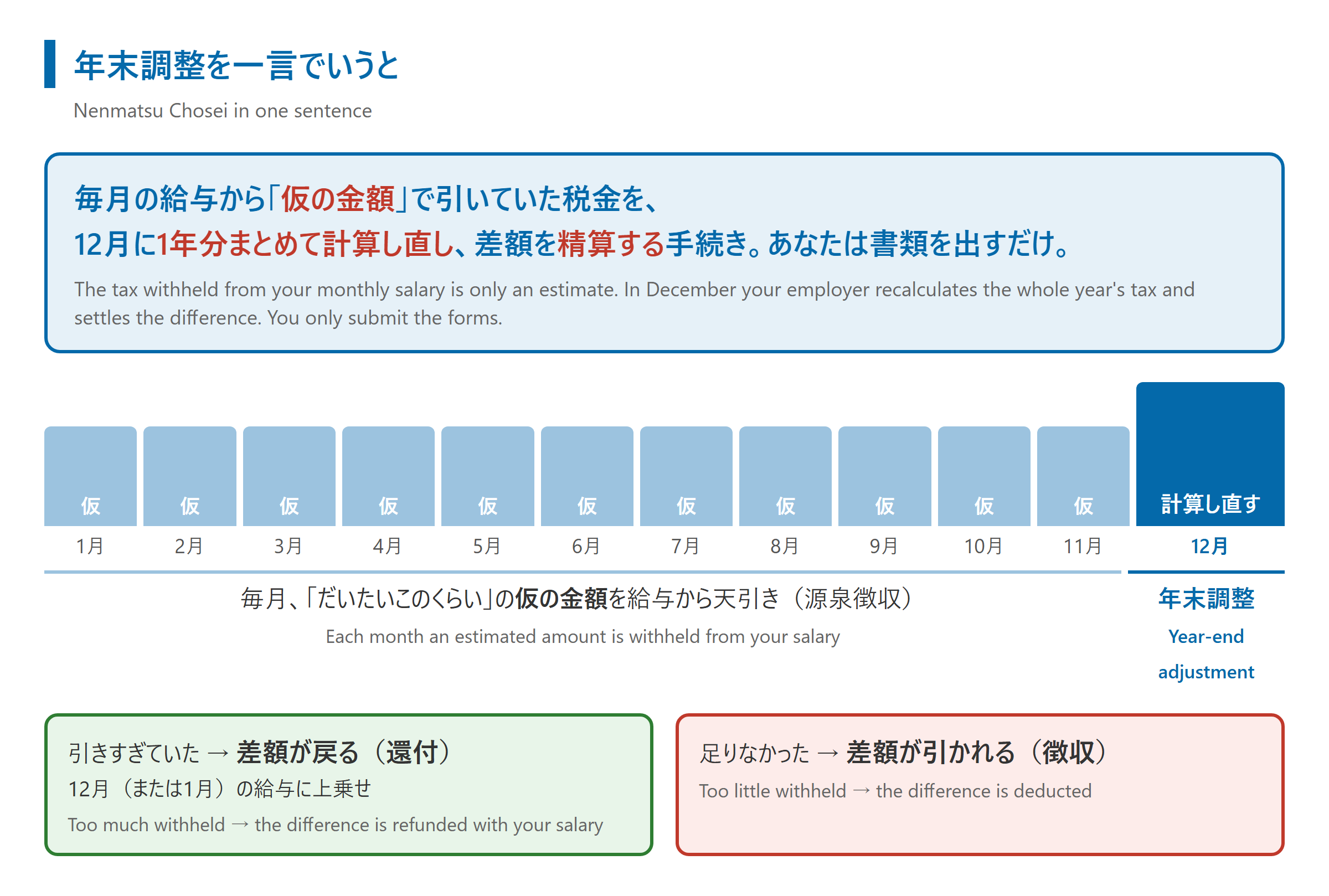
毎月の給与から引かれている税金は「仮の金額」です
日本では、会社が毎月の給与から所得税(しょとくぜい)を引いて、国に納めています。これを源泉徴収(げんせんちょうしゅう)といいます。
しかし、毎月引いている金額は、「だいたいこのくらい」という仮の金額(概算)です。
あなたの1年間の正しい税金は、1年が終わらないと決まりません。家族の人数、払った保険料などで変わるからです。
12月に、1年分を計算し直して、差額を精算します
そこで、会社は12月に、1月から12月までの給与の合計と、あなたの家族や保険の情報をもとに、1年間の正しい税金を計算します。
- 毎月引いた合計が、正しい税金より多かった → 差額が戻ってきます(還付・かんぷ)。12月(または1月)の給与に上乗せされます。
- 毎月引いた合計が、正しい税金より少なかった → 差額が引かれます(徴収・ちょうしゅう)。
この手続きが年末調整です。ほとんどの人は、年末調整で1年の税金の手続きが終わります。
確定申告(かくていしんこく)との違い
- 年末調整:会社が、あなたの給与について行う手続き。あなたは書類を出すだけ。
- 確定申告:自分で税務署に1年分の税金を申告する手続き(翌年2月中旬〜3月中旬)。
次のような人は、年末調整のほかに(または年末調整の代わりに)確定申告が必要です。
- 給与のほかに収入がある(副業、不動産の家賃、株など)
- 2か所以上の会社から給与をもらっている
- 医療費控除(いりょうひこうじょ)や、ふるさと納税の寄附金控除を受けたい
- 住宅ローン控除の1年目
- 前の会社の源泉徴収票が出せなかった
- 年収が2,000万円を超える
In English
In Japan your employer deducts income tax from your monthly salary and pays it to the government (“withholding at source”, gensen choshu). The monthly amount is only an estimate. Your correct tax for the year cannot be known until the year ends, because it depends on your family, insurance premiums and so on.
In December the employer recalculates the tax for the whole year (January–December) using your family and insurance information. If too much was withheld, the difference is refunded with your December (or January) salary. If too little was withheld, the difference is deducted. This is Nenmatsu Chosei (year-end adjustment). For most employees, this completes their income-tax filing for the year.
Difference from Kakutei Shinkoku (individual tax return): Nenmatsu Chosei is done by your employer for your salary; you only submit the forms. Kakutei Shinkoku is a return you file yourself at the tax office (mid-February to mid-March of the following year). You need Kakutei Shinkoku if, for example, you have income other than salary (side business, rent, stocks), you receive salary from two or more companies, you want medical-expense or Furusato-Nozei donation deductions, it is the first year of your home-loan deduction, you could not obtain the withholding slip from your previous employer, or your salary exceeds 20 million yen.
3. 3種類の申告書 ── それぞれの役割と見るところ / The three forms: what each one is for, and where to look
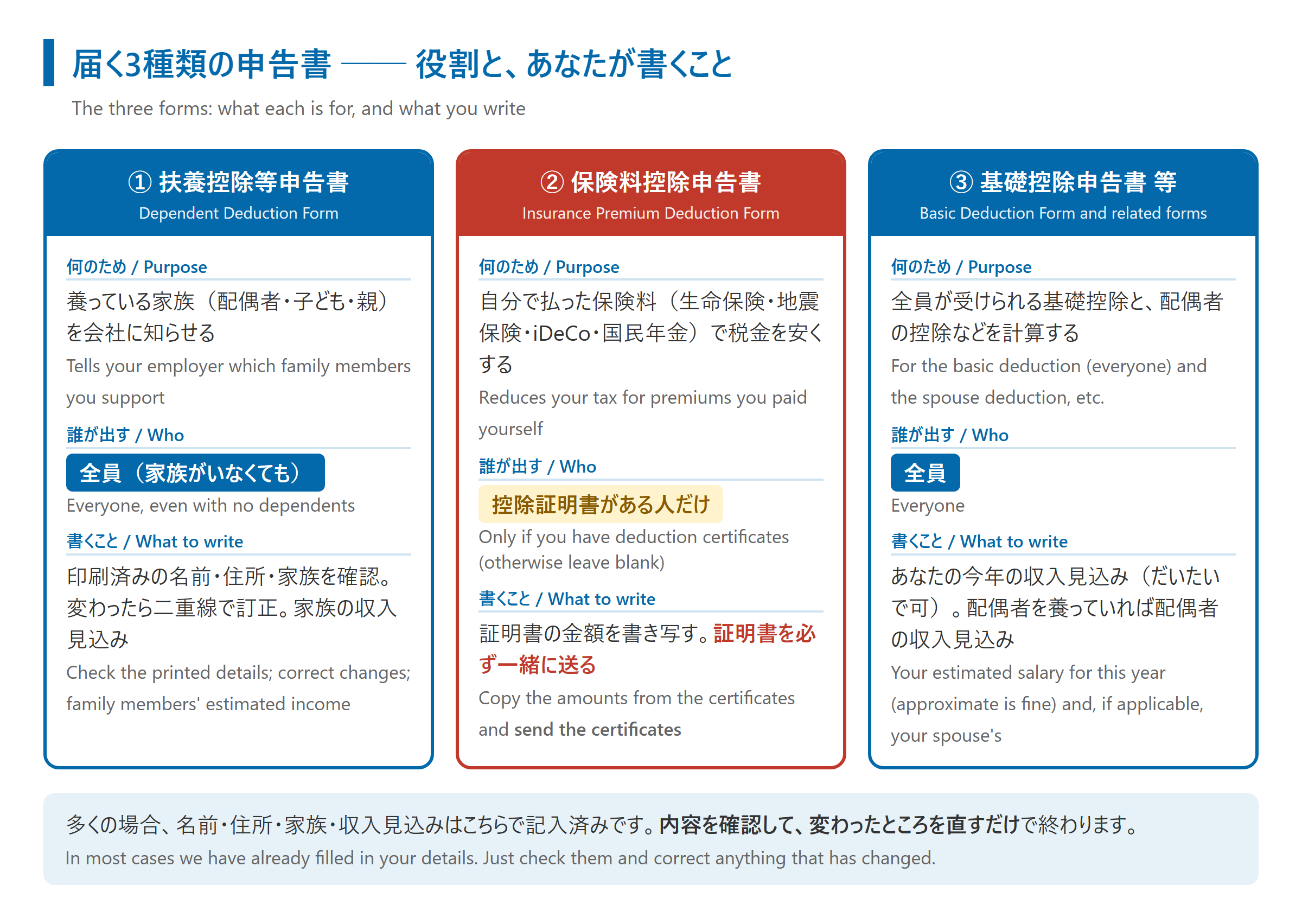
3-1. 扶養控除等申告書(ふようこうじょとう しんこくしょ)
何のための書類?
あなたが養っている家族(扶養・ふよう)を会社に知らせる書類です。
配偶者(夫・妻)、子ども、親などを養っていると、その分、税金が安くなります(扶養控除・配偶者控除など)。
この書類は、養っている家族がいない人も、必ず出します。出さないと、毎月の税金が高い方のルール(乙欄)で引かれてしまいます。
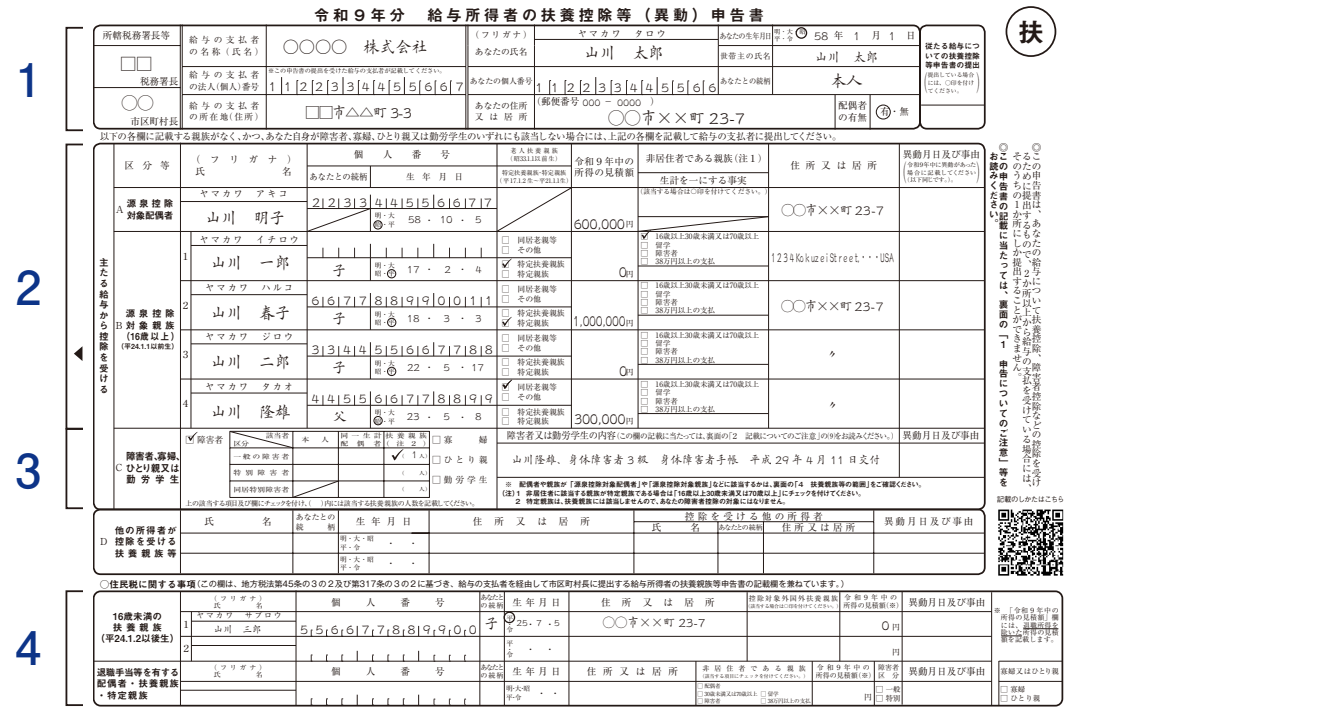
どこを見ればよい?
- 一番上:あなたの名前・住所・生年月日 → 正しいか確認
- A 源泉控除対象配偶者:夫または妻を養っている人が書く欄
- B 控除対象扶養親族:16歳以上の子ども・親などを養っている人が書く欄。19歳以上23歳未満の子どもは「特定扶養親族」または「特定親族」として、控除が大きくなります
- C 障害者、寡婦、ひとり親、勤労学生:当てはまる人だけ
- 一番下 16歳未満の扶養親族:16歳未満の子どもはここに書きます(住民税の計算に使います)
家族の「所得の見積額」の欄には、その家族の今年1月〜12月の収入の見込みをもとに書きます。
よくわからないときは、「収入見込み:年○○万円くらい(アルバイト/パート/無職)」と書くか、連絡して教えてください。こちらで判断します。
2年分あることに注意
扶養控除等申告書は、「今年分」と「来年分」があります。秋に届くのは、ふつう来年分です。
今年の家族の状況が、すでに出してある今年分の内容と変わっていたら、その変更も教えてください。2026年は、家族の収入の上限が広がった(年収123万円以下 → 136万円以下)ため、昨年まで対象外だった家族が対象になる人もいます。 心当たりがあれば、教えてください。
In English – Dependent Deduction Form (Fuyo Kojo-to Shinkokusho)
This form tells your employer which family members you financially support (spouse, children, parents). Supporting family reduces your tax. Everyone must submit this form, even with no dependents; without it, a higher withholding rate applies to your monthly salary.
Check: the top section (your name, address, date of birth); box A (spouse); box B (dependents aged 16 or over – children aged 19 to 22 give a larger deduction); box C (disability, widow, single parent, working student – only if applicable); the bottom section (children under 16, used for resident tax).
For each family member, write their estimated income for January–December of this year. If you are not sure, write something like “part-time, about ¥○○ per year” or just tell us.
Note there are two versions: this year’s and next year’s. The one you receive in autumn is usually next year’s. If your family situation for this year has changed since you submitted this year’s form, tell us too. In 2026 the income limit for a dependent family member was raised (salary ¥1.23 million → ¥1.36 million), so a family member who did not qualify last year may qualify now.
3-2. 保険料控除申告書(ほけんりょうこうじょ しんこくしょ)
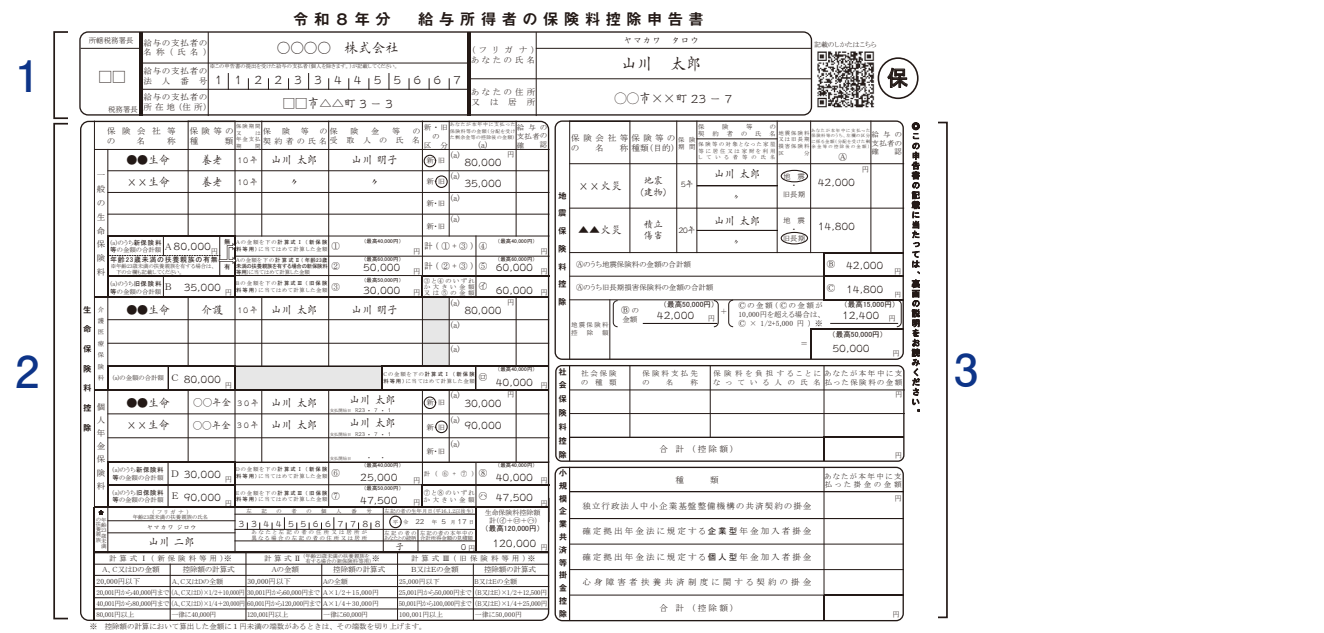
何のための書類?
あなたが自分で払った保険料などを申告して、税金を安くするための書類です。
控除証明書がない人は、この書類は白紙のままでかまいません。
どこを見ればよい?(4つのブロック)
| ブロック | 書くもの | 必要な証明書 |
|---|---|---|
| 生命保険料控除 | 生命保険・医療保険・がん保険・個人年金保険 | 保険会社の「控除証明書」 |
| 地震保険料控除 | 地震保険(火災保険とセットのもの) | 保険会社の「控除証明書」 |
| 社会保険料控除 | 自分で払った国民年金・国民健康保険(家族の分を払った場合も含む) | 国民年金は「控除証明書」が必要。国民健康保険は証明書不要(払った金額を書く) |
| 小規模企業共済等掛金控除 | iDeCo、小規模企業共済 | 「払込証明書」 |
書き方のポイント
- 証明書に書いてある「申告額」「年間払込見込額」などの金額を、そのまま書き写します。
- 保険の種類(一般・介護医療・個人年金/新・旧)は、証明書に書いてあります。記入が難しい場合は、その旨を連絡してください。証明書は必ず送ってください。
- 会社の給与から引かれている健康保険・厚生年金・雇用保険は、書かなくてよいです(会社が把握しています)。
In English – Insurance Premium Deduction Form (Hokenryo Kojo Shinkokusho)
Use this form to declare premiums you paid yourself, which reduce your tax. If you have no certificates, leave this form blank.
The form has four blocks: life insurance (life, medical, cancer, private annuity – needs the insurer’s certificate); earthquake insurance (needs the insurer’s certificate); social insurance you paid yourself (National Pension – certificate needed; National Health Insurance – no certificate, just write the amount paid; includes premiums you paid for family members); and iDeCo / small-business mutual aid (needs the payment certificate).
Copy the amounts printed on the certificate. If you find the categories (general / medical-care / annuity, new / old contract) difficult, tell us – but always send the certificates. Do not write health insurance, pension or employment insurance deducted from your salary; your employer already has those figures.
3-3. 基礎控除申告書 等(きそこうじょ しんこくしょ とう)
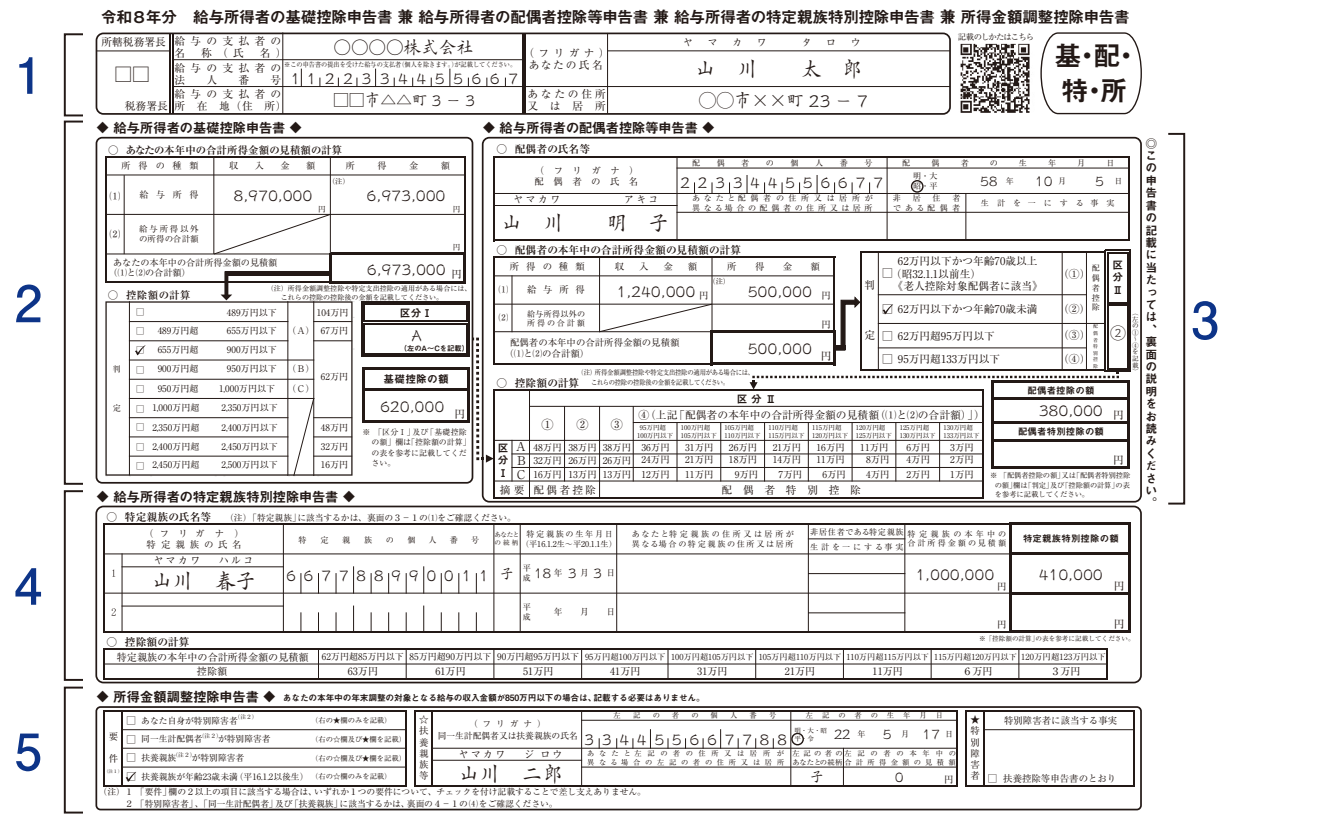
正式名称は「給与所得者の基礎控除申告書 兼 給与所得者の配偶者控除等申告書 兼 給与所得者の特定親族特別控除申告書 兼 所得金額調整控除申告書」。1枚の紙に4つの申告書が入っています。
何のための書類?
- 基礎控除:すべての人が受けられる控除。あなた自身の今年の収入見込みを書きます。2026年分は、合計所得489万円以下(給与だけなら年収およそ665万円以下)の人で104万円、それより多い人は67万円・62万円と段階的に小さくなります。合計所得2,500万円を超える人はありません。
- 配偶者控除・配偶者特別控除:夫または妻の収入が少ない人が受けられます。配偶者の今年の収入見込みを書きます。
- 特定親族特別控除:19歳以上23歳未満の子どもなどで、アルバイト収入が年123万円〜197万円くらいある人がいる場合。令和7年分から始まった新しい控除です。
- 所得金額調整控除:年収850万円を超えていて、23歳未満の子どもがいる人など。
どこを見ればよい?
- 左上の基礎控除申告書:あなたの今年の給与収入の見込み(1月〜12月の合計)。だいたいの金額でかまいません。こちらで正確な金額に直します
- 右側の配偶者控除等申告書:夫・妻を養っている人だけ。配偶者の名前・生年月日・今年の収入見込み
- 特定親族特別控除申告書:19〜22歳の子どもなどが働いている人だけ
- 所得金額調整控除申告書:年収850万円超で、該当する人だけ
ほとんどの人は、「自分の収入見込み」と「配偶者の収入見込み」を書けば終わりです。 多くの場合、こちらで記入済みです。
In English – Basic Deduction Form and related forms (Kiso Kojo Shinkokusho-to)
Four forms are combined on one sheet: (1) Basic deduction – everyone gets this; write your own estimated salary for this year. For 2026, people with total income of ¥4.89 million or less (roughly ¥6.65 million salary or less) get ¥1.04 million; higher earners get ¥670,000 or ¥620,000; above ¥25 million total income there is none. (2) Spouse deduction / special spouse deduction – if your spouse has low income; write your spouse’s estimated income for this year. (3) Special deduction for specified relatives – for children aged 19 to 22 with part-time income of roughly ¥1.23–1.97 million; new since 2025. (4) Income adjustment deduction – only for people earning over ¥8.5 million with a child under 23, etc.
Where to look: top-left (your estimated salary January–December – an approximate figure is fine, we will correct it); right side (spouse’s name, date of birth and estimated income – only if you support a spouse); the specified-relative and income-adjustment sections only if they apply to you. For most people, writing your own and your spouse’s estimated income is all that is needed, and in most cases we have already filled this in.
4. 控除証明書(こうじょしょうめいしょ)とは? どんな書類が、いつ届く? / Deduction certificates: what they look like and when they arrive
控除証明書は、「今年、この人はこれだけ保険料を払いました」と証明する書類です。保険会社や年金機構から、あなたの家に郵送されてきます(会社には届きません)。
ハガキや小さな封書で届くことが多く、広告と間違えて捨ててしまう人がいます。秋に届く保険会社からの郵便は、捨てずに取っておいてください。
【とても重要】控除証明書は、年末調整でいちばん大切な書類です。 証明書がないと、税金を安くすることができません。届いたら、必ず当事務所に送ってください。
| 書類 | 送ってくるところ | 届く時期(目安) | メモ |
|---|---|---|---|
| 生命保険料控除証明書 | 加入している生命保険会社 | 10月〜11月ごろ | 「保険料払込証明書」「控除証明書」などの名前。保険会社ごとに1通ずつ届く |
| 地震保険料控除証明書 | 損害保険会社 | 10月〜11月ごろ(火災保険の証券に付いていることもある) | 火災保険だけでは対象になりません。「地震保険料控除証明書」と書いてあるもの |
| 社会保険料(国民年金保険料)控除証明書 | 日本年金機構 | 1〜9月に納めた人:10月下旬〜11月上旬。10月以降に初めて納めた人:翌年2月上旬 | 会社の厚生年金に入っている人には届きません。自分や家族の国民年金を払った人だけ |
| 小規模企業共済等掛金払込証明書(iDeCo) | 国民年金基金連合会 | 10月下旬〜11月ごろ(年の途中で始めた人は12月〜翌年1月のことも) | 給与天引きでiDeCoをしている人は不要 |
| 住宅ローン控除の書類 | 税務署(申告書)+銀行(年末残高証明書) | 10〜11月ごろ | 2年目以降の人だけ年末調整でできる。1年目は確定申告 |
電子データ(マイナポータル連携など)で受け取っている場合は、その画面を印刷したもの、またはPDFでも大丈夫です。
In English
A deduction certificate (kojo shomeisho) proves how much premium you paid this year. Insurers and the Japan Pension Service mail it to your home, not to your company, often as a postcard or small envelope. People sometimes throw it away as junk mail – keep any mail from your insurance company that arrives in autumn.
[Very important] Deduction certificates are the most important documents for Nenmatsu Chosei. Without them your tax cannot be reduced. When they arrive, always send them to our office.
Typical certificates and timing: life insurance (from each insurer, October–November); earthquake insurance (from the non-life insurer, October–November; fire insurance alone does not qualify); National Pension premiums (from the Japan Pension Service, late October to early November for premiums paid January–September, early February of the following year for people who first paid in October or later; not sent to people enrolled in Employees’ Pension through their company); iDeCo (from the National Pension Fund Association, late October to November; not needed if iDeCo is deducted from salary); home-loan deduction documents (tax office form plus bank year-end balance certificate; year-end adjustment is possible from the second year only).
If you receive certificates electronically (e.g. via Mynaportal), a printout or PDF is fine.
5. よくある質問 / Frequently asked questions
Q1. 今年の途中で入社しました。何か必要ですか?
前の会社の「源泉徴収票(げんせんちょうしゅうひょう)」が必要です。
年末調整は、今年1月〜12月のすべての給与をまとめて計算します。前の会社の給与・税金・社会保険料の金額がわからないと、計算できません。
前の会社に「源泉徴収票をください」と頼んでください(会社は退職後1か月以内に出す義務があります)。
どうしてももらえない場合は、年末調整ができないので、翌年に自分で確定申告をすることになります。
Q1. I joined the company part-way through this year. Do I need anything? – Yes, the withholding slip (gensen choshu hyo) from your previous employer. Nenmatsu Chosei covers all salary from January to December, so we need the previous company’s salary, tax and social-insurance figures. Ask your previous employer for it (they must issue it within one month after you leave). If you cannot obtain it, year-end adjustment is not possible and you will file your own tax return next year.
Q2. 家族を養っています。家族の収入は、どう書けばいいですか?
申告書には「所得の見積額」を書く欄がありますが、「収入(もらった金額)」と「所得(税金の計算に使う金額)」は違います。計算が難しいので、その家族の今年1月〜12月の「収入」の見込み金額をそのまま教えてください(例:パート年100万円くらい)。こちらで所得に直します。
目安:配偶者や子どもなどの家族は、給与収入が年136万円以下なら、あなたの控除の対象になります(2026年分)。19〜22歳の子どもは、年197万円以下まで段階的に控除があります。
Q2. I support family members. How do I write their income? – The form asks for “estimated income (shotoku)”, which is different from gross pay (shunyu). Simply tell us the family member’s estimated gross income for January–December (e.g. “part-time, about ¥1 million a year”); we will convert it. As a guide, a spouse or child with salary of ¥1.36 million or less qualifies as your dependent (2026); children aged 19–22 get a graduated deduction up to ¥1.97 million.
Q3. 家族が母国(日本の外)に住んでいます。扶養に入れられますか?
入れられる場合があります。ただし、日本に住む家族より条件が厳しく、書類が必要です。
年齢の条件(12月31日時点)
- 16歳以上30歳未満、または 70歳以上 → 対象になります
- 30歳以上70歳未満 → 原則として対象外。ただし、次のどれかなら対象:①留学している、②障害がある、③あなたがその人に、今年38万円以上送金している
- 16歳未満の子ども → 所得税の扶養控除の対象ではありません
必要な書類(毎年必要)
- 親族関係書類:その人があなたの家族であることを証明する書類。外国政府が発行した出生証明書・結婚証明書・戸籍などと、その人のパスポートのコピー。外国語の書類には日本語の翻訳文をつけます(自分で翻訳したものでかまいません)
- 送金関係書類:あなたがその人あてに、今年、生活費や教育費を送ったことがわかる書類。銀行・送金サービスの送金明細、または家族が使っているクレジットカード(あなた名義の家族カード)の利用明細のコピー
- 家族ひとりひとりに送金した記録が必要です。まとめて1人に送ると、その1人の分にしかなりません
- 知人に頼んで現金で手渡しした場合や、「渡しました」という申立書だけでは、認められません
- 30〜69歳の人を③で入れる場合は、合計38万円以上送金した記録が必要です
- 留学の場合は、留学ビザ等書類(留学の在留資格がわかるビザや在留カードのコピー)
書類がそろわないと、その家族の分の控除は受けられません。早めに準備してください。
Q3. My family lives in my home country. Can I claim them as dependents? – Sometimes, but the rules are stricter than for family living in Japan, and documents are required every year.
Age (as of 31 December): aged 16–29 or 70 and over → eligible. Aged 30–69 → not eligible, unless the person is (1) studying abroad, (2) has a disability, or (3) received ¥380,000 or more from you this year. Children under 16 are not eligible for the income-tax dependent deduction.
Documents: (1) Relationship documents – a document issued by a foreign government proving the person is your relative (birth certificate, marriage certificate, family register, etc.) plus a copy of their passport; documents in a foreign language need a Japanese translation (your own translation is acceptable). (2) Remittance documents – bank or money-transfer statements showing you sent living or education expenses to that person this year, or statements of a family credit card in your name used by that person. Remittances must be to each person individually; sending everything to one person covers only that person. Cash handed over through friends, or a written statement that you gave cash, is not accepted. For category (3) above, the records must total ¥380,000 or more. (3) For students, a copy of the student visa or residence card.
Without these documents the deduction for that family member cannot be applied, so please prepare early.
Q4. 控除証明書をなくしました。どうすればいいですか?
保険会社・日本年金機構・iDeCoの運営機関に連絡すれば、再発行してもらえます。
多くの保険会社は、Webのマイページや電話で再発行を受け付けています。年金は「ねんきんネット」からも取れます。
再発行が間に合わないときは、まず「再発行を待っています」と連絡してください。翌年1月中なら年末調整をやり直せることがあります。それも難しいときは、確定申告で控除を受けられます。
Q4. I lost my deduction certificate. – Contact the insurer, the Japan Pension Service or your iDeCo provider for a reissue; most insurers accept requests online or by phone, and pension certificates can be obtained via “Nenkin Net”. If the reissue will not arrive in time, tell us; the year-end adjustment can sometimes be redone during January of the following year, and otherwise you can claim the deduction in your own tax return.
Q5. 保険に入っていません。何も送らなくていいですか?
はい。「控除証明書はありません」と返事をするだけで大丈夫です。書類の記入はいりません。
Q5. I have no insurance. Do I need to send anything? – No. Just reply “I have no certificates”. No form needs to be filled in.
Q6. 会社の社長(役員)です。私も年末調整をするのですか?
はい。役員報酬も給与と同じなので、社長や役員も年末調整の対象です。従業員と同じ3種類の申告書を確認してください。
Q6. I am the company representative (director). Do I also do Nenmatsu Chosei? – Yes. Directors’ remuneration is treated as salary, so directors go through the same procedure and check the same three forms.
Q7. 2か所以上の会社で働いています。
扶養控除等申告書は、メインの会社1か所にだけ出します。年末調整もその会社だけで行い、もう1か所の給与は、翌年に自分で確定申告します。
Q7. I work for two or more companies. – Submit the Dependent Deduction Form to your main employer only. Only that employer does the year-end adjustment; income from the other employer is reported in your own tax return the following year.
Q8. 日本語の書類が読めません。英語などの様式はありますか?
国税庁が、英語・中国語・ベトナム語などの翻訳版の様式と説明を公開しています(末尾の「参考(国税庁ほか)」参照)。ただし、提出するのは日本語の様式です。翻訳版は、日本語の様式の各欄が何を意味するかを確認するために使ってください。
記入が難しい場合は、「記入が難しい」と連絡してください。
Q8. I cannot read the Japanese forms. Are there English versions? – The National Tax Agency publishes translated versions (English, Chinese, Vietnamese, etc.) of the forms and explanations (see “References” below). However, the form you submit is the Japanese one; use the translation to understand what each box means. If filling in the forms is difficult, contact us and say so.
Q9. 年末調整が終わると、何がもらえますか?
12月または1月に、「源泉徴収票(げんせんちょうしゅうひょう)」をお渡しします。あなたの1年間の給与と税金が書かれた大切な書類です。在留資格の更新・永住申請、住宅ローン、保育園の申込みなどで必要になるので、なくさないでください。
Q9. What do I receive when Nenmatsu Chosei is finished? – In December or January you receive a withholding slip (gensen choshu hyo) showing your annual salary and tax. You will need it for visa renewal or permanent-residence applications, home loans, nursery-school applications and so on, so keep it safe.
まとめ / Summary
- 秋に家に届く控除証明書を集める。証明書を送ることが、いちばん大切です。何もなければ「ありません」と返事をするだけ
- 届いた3種類の申告書を確認・記入し、変わったところがあれば二重線で直す。記入が難しい場合は、その旨を連絡する
- 申告書と控除証明書を一緒に送る
わからないことは、そのままにせず、聞いてください。
- Collect the deduction certificates mailed to your home in autumn – sending the certificates is the most important thing; if you have none, just reply “none”.
- Check and fill in the three forms, correcting any changes with a double line; if this is difficult, tell us.
- Send the forms together with the certificates.
If anything is unclear, ask us.
参考(国税庁ほか) / References
国税庁(National Tax Agency)
- 年末調整がよくわかるページ(令和8年分)
- 令和8年分 年末調整のしかた「昨年と比べて変わった点」(PDF)
- 年末調整のしかた(令和8年分)掲載ページ
- 給与所得者(従業員)の方向けページ
- 各種申告書(令和8年分・令和9年分)一覧
- タックスアンサー
- 国外居住親族に係る扶養控除等Q&A(源泉所得税関係・最終改訂 令和8年8月)
- 非居住者である親族について扶養控除等の適用を受ける方へ(外国語版リーフレット掲載ページ)
日本年金機構(Japan Pension Service)
最終更新日:2026年11月2日(令和8年分の制度で記載)
Last updated: 2 November 2026 (based on the 2026 rules)